Posts from the ‘Mischief Managed’ Category
Apr 16
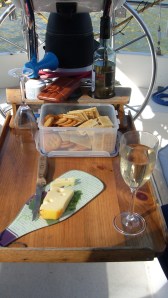
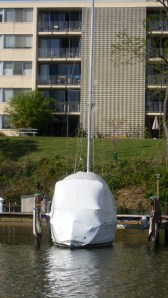
Still a bit early for some sailors —–
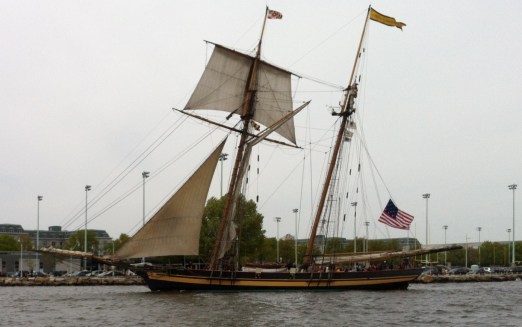
We saw ongoing class races and got a close look at Pride II in Annapolis for a few days. (J Nandy photo) Just passing the Naval Academy headed for City Dock at the North American Sailing Hall of Fame.
Mar 25
Oysters and socks
Within every community there are events that mark the passage of time. We recognize such changes in different ways in different cultures. Children grow into adults – though some of us may never have quite made it. . Individuals retire from working careers. And sailors, who pay special attention to seasons, recognize the arrival of Spring and the beginning of sailing season. Traditionally on the Bay we do so with the ‘burning of the socks’. By losing the socks that provided winter warmth, we prepare for the warm months of bare feet and boat shoes.
Many organizations hold sock burning parties close to the Spring equinox throughout the Bay. Such event was held yesterday (March 24) at the Annapolis Maritime Museum. Appropriately, the event was an all-you-can-eat Oyster Roast, with entertainment by Them Eastport Oyster Boys providing great music!

While it turned a bit chilly and wet, none-the-less the fire was lit and socks were burned. Although it took a bit of scrounging to get the fire started………

Thanks to the AMM for another fine event – to paraphrase Them Oyster Boys, good food, good music, good times …. and welcome to another sailing season!
Mar 21
Spring equinox …
….at least for me, the official start of the sailing season! In honor of the celestial event, I motored out of the slip if only briefly.
Spent four days on the boat working through the Spring engine maintenance routine including checks of zincs, impellers and filters, topping coolant level and changing oil. Checked all the fitting and tightened nuts where needed, inspected all the sheets and halyards for wear, and organized gear below deck. Finally, tested all the navigation lighting and instruments. All that remains of the Spring check list is to clean and fill the fresh water system, and just received word that the marina will turn on the dock water tomorrow.
The very mild winter and early Spring has made it possible to ready the boat more easily and quickly this year. Hoping that all this nice weather will continue through the summer and late into next Fall making for a long season on the Bay.
Next post should include pictures under sail! Some are perhaps a bit impatient to be underway…….
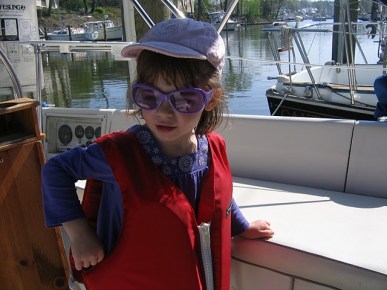
miss Addison looks ready to go .........
FROM WIKIPEDIA:
An equinox occurs twice a year (around 20 March and 22 September), when the tilt of the Earth‘s axis is inclined neither away from nor towards the Sun, the center of the Sun being in the same plane as the Earth’s equator. The term equinox can also be used in a broader sense, meaning the date when such a passage happens. The name “equinox” is derived from the Latin aequus (equal) and nox (night), because around the equinox, the night and day have approximately equal length.
At an equinox, the Sun is at one of two opposite points on the celestial sphere where the celestial equator (i.e. declination 0) and ecliptic intersect. These points of intersection are called equinoctial points: classically, the vernal point and the autumnal point. By extension, the term equinox may denote an equinoctial point.
Mar 13
Mid-Atlantic Coast Wind Development
For interested sailors, the lease parcels lie 8+ nautical miles off shore. The link to maps provides a good look at the potential distribution………. reprint from Maryland’s Chesapeake & Coastal Service News – March 2012.
OBAMA ADMINISTRATION ANNOUNCES MAJOR STEPS TOWARD LEASING FOR OFFSHORE WIND PROJECTS IN MID-ATLANTIC
Leasing Process for Commercial Wind Development Initiated for Offshore Maryland
 |
|
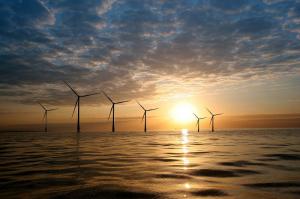
Kentish Flats wind power farm, in sunset. Photo by Vattenfall. |
On February 2, 2012, the Department of Interior announced that the Bureau of Ocean Energy Management (BOEM) is moving forward with the process for wind energy lease sales off the coasts of Maryland, Virginia, New Jersey and Delaware. BOEM’s National Environmental Policy Act (NEPA) assessment found that there would be no significant environmental and socioeconomic impacts from issuing wind energy leases in designated Outer Continental Shelf (OCS) areas off the mid-Atlantic Coast.
The environmental assessment considered potential environmental impacts associated with site assessment activities, such as geophysical, geotechnical, archeological and biological surveys and the installation and operation of meteorological towers and buoys. BOEM will use this environmental assessment to inform future leasing decisions in the Mid-Atlantic, including those emerging from BOEM’s recent Call for Information and Nominations (Call) for Maryland’s Wind Energy Area (WEA). Through this Call, BOEM is soliciting additional lease nominations and is requesting public comments about site conditions, resources and other existing uses of the WEA off the coast of Maryland. Once a lease is obtained and the developer proposes a wind energy generation project on its lease, BOEM will prepare a separate site- and project-specific analysis under NEPA of its construction and operations plan, and provide additional opportunities for public involvement.
The Call Area offshore Maryland contains nine whole OCS blocks and 11 partial blocks. A map of the area of interest can be found at: http://www.boem.gov/Renewable-Energy-Program/State-Activities/Maryland.aspx.
For more information on Maryland’s efforts to plan for offshore wind and to help the State to balance multiple uses in the ocean, visit http://dnr.maryland.gov/ccp/coastal_resources/oceanplanning.
Mar 12
Messing about in (with) boats….
Ever wonder where the expression came from ?
`Nice? It’s the ONLY thing,’ said the Water Rat solemnly, as he leant forward for his stroke. `Believe me, my young friend, there is NOTHING–absolutely nothing–half so much worth doing as simply messing about in boats. Simply messing,’ he went on dreamily: `messing–about–in–boats; messing—-‘
`Look ahead, Rat!’ cried the Mole suddenly. It was too late. The boat struck the bank full tilt. The dreamer, the joyous oarsman, lay on his back at the bottom of the boat, his heels in the air. `–about in boats–or WITH boats,’ the Rat went on composedly, picking himself up with a pleasant laugh. `In or out of ’em, it doesn’t matter.
Nothing seems really to matter, that’s the charm of it. Whether you get away, or whether you don’t; whether you arrive at your destination or whether you reach somewhere else, or whether you never get anywhere at all, you’re always busy, and you never do anything in particular; and when you’ve done it there’s always something else to do, and you can do it if you like, but you’d much better not. Look here! If you’ve really nothing else on hand this morning, supposing we drop down the river together, and have a long day of it?’
Kenneth Grahame [Childrens story writer – Scottish, died 1932]
Feb 27
Looking back……..
Well, it’s almost March! Early season boating activities are underway. CCYC enjoyed a great wine tasting at Vin 909 in Eastport last Saturday, and there was a good turnout at the SOS Happy Hour on Thursday.
Plans and conversations are focused on re-comminssioning – who will be first in this milder than usual Spring? Valinor is almost ready now – just a couple maintenance items then flush and treat the fresh water system and crank the engine! With any luck, and if weather holds, we’ll be sailing by the Ides of March…………
Meanwhile, here are some pixs from the 2011 season:
First raft of the season at the SOS Shakedown cruise.
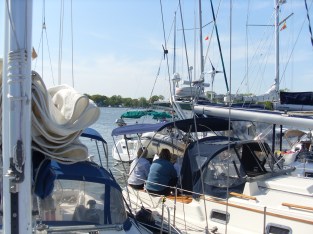
Making time along the C&D Canal at the beginning of the DelMarVa cruise……… with company ……….
Off shore heading down the Maryland coast
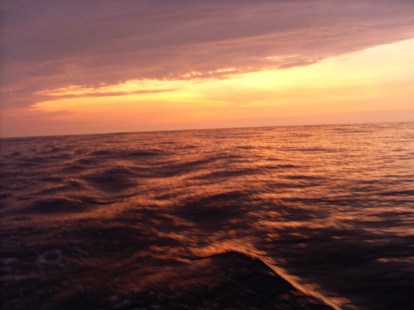
Ingram Bay coming home 

Last raft of the 2011 season …
Just a few weeks away from the first 2012 on-the-water cruise !
Feb 17
Spring IS coming
Looking back over the past winter here in the Chesapeake Bay region, I wonder why any of us bothered to winterize our boats. Bay water temperatures never dropped below about 39F, and I don’t recall that sub-freezing temps ever persisted for more than some overnight hours – certainly not long enough to create on-board freezing issues.
Nothing like the experience from 2010 –
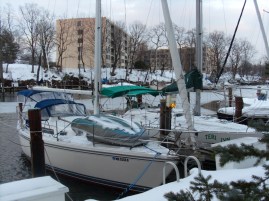
One cold winter
While winter is not yet over, we are on the upswing. Days are getting longer giving us more sun time, and encouraging thoughts of getting back on the water. Valinor will get de-winterized in the next couple weeks. Some friends who went south for the winter are heading north, and all the usual Spring signs around the homestead are ahead of schedule. The local red-tailed hawk pair is setting up housekeeping, birds are increasingly vocal about the morning, and crocuses have pushed up though the litter debris.
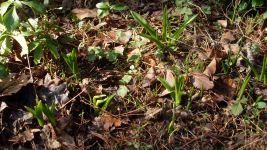
Early signs .....
So, first warm day or two will provide the final push to flush and clean the fresh water system, find out why the poor pressure on the hot water side (and repair), change engine fluids and filters, and crank the engine. All this followed by a thorough Spring cleaning of the cabin and deck, re-mounting on-deck safety equipment and dingy outboard.
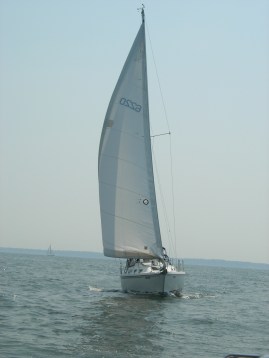
Then the very first sail of the season, and the beginning of a busy cruising calendar!
Feb 10
Climate change strategy available for review and comment
edited from DOI press release……
In 2010, Congress called for a national, government-wide strategy to address impacts of changing climate, and directed the President’s Council on Environmental Quality and the Department of the Interior to develop it. CEQ and Interior brought together a partnership of federal, state and tribal fish and wildlife conservation agencies to draft the strategy. More than 100 researchers and resource managers from across the country contributed to the draft document.
That draft titled “National Fish, Wildlife and Plants Climate Adaptation Strategy” is available for public review and comment through March 5, 2012. It can be found on the web at www.wildlifeadaptationstrategy.gov
The strategy creates a framework for unified action to safeguard fish, wildlife and plants, as well as the important benefits and services the natural world provides, including jobs, food, clean water, clean air, building materials, storm protection, and recreation.
Department of Interior Deputy Secretary David J. Hayes noted: “The impacts of climate change are already here and those who manage our landscapes are already dealing with them. The reality is that rising sea levels, warmer temperatures, loss of sea ice and changing precipitation patterns – trends scientists have definitively connected to climate change – are already affecting the species we care about, the services we value, and the places we call home. A national strategy will help us prepare and adapt.”
Author Comment: Coastal areas are especially vulnerable to changes that can affect recreational boaters, marinas and other shore-based services. It is incumbent upon the boating community to pay attention to this report, and be sure that it addresses those interests.
The draft Strategy is available for review and comment. The 45-day public comment period is from January 20 to March 5.
Feb 3
LIVING SHORELINE INSTALLED AT GREYS CREEK NATURE PARK (from CCS ‘In the Zone’)
Projects such as these highlight the importance of the many conservation partnerships at work around the Chesapeake Bay and elsewhere to restore and improve our aquatic resources.
______________________________
CCS Spotlight is a feature of the In the Zone e-mail service (see below) that highlights programs that have been developed by the Chesapeake & Coastal Service or through partnership and support from federal, state and local partners helping to advance coastal management in Maryland.
This past year, Maryland’s Coastal Program worked with DNR’s Habitat Restoration and Conservation and Engineering and Construction divisions to complete a living shoreline restoration project at Greys Creek Nature Park in Worcester County, the former Weidman Property.
The 572-acre waterfront property was acquired in 2006 by the State and Worcester County with the assistance of NOAA’s Coastal and Estuarine Land Conservation Program funds. The entire property sits at the top of the Maryland Coastal Bays in one of the most biologically diverse areas in the Delmarva region. Its natural habitat includes upland coastal forests, extensive sensitive non-tidal and tidal saltwater wetlands and several small islands just off shore…..
|
For more on this story and other projects of CCS sign up .. IN THE ZONE is a service from the Maryland Department of Natural Resources’ http://visitor.r20.constantcontact.com/manage/optin/ea?v=001Rx4RxQ1SVjZyizs9kry3Pg%3D%3D that delivers timely information, tools and resources to those who live, work and play in Maryland’s coastal zone. |
Jan 27
Making of a sailor
Close your eyes for a bit, and rewind the clock a few years, maybe more than a few for some of us, and call to memory a hot, summer day just after the rain stopped. The sun was breaking through the clouds sending bright shafts of light to ground. Mist was rising off the hot soil, and puddles were scattered in every low spot. I know what I did, but what did you do with those puddles?
For me it was bare foot time, and I stomped in about every puddle I could find relishing the pure joy of it. Then I rummaged through my collection of toys, found a boat or two and headed back to the puddles to go sailing. With imagination only found in small children, I sailed around the world, survived storms, was chased by pirates, and discovered new lands – all in the space of a few square feet of ocean that was rarely deeper than a couple inches. Thus was made a sailor.
Sixty or so years later I can still conjure up those same feelings, and occasionally that same pure joy of being on the water, under sail now with the real world within reach – at least in my imagination. Have survived storms, found lands that were at least new to me, and been chased by pirates of a sort. So, at least in some things we do come full circle in life.
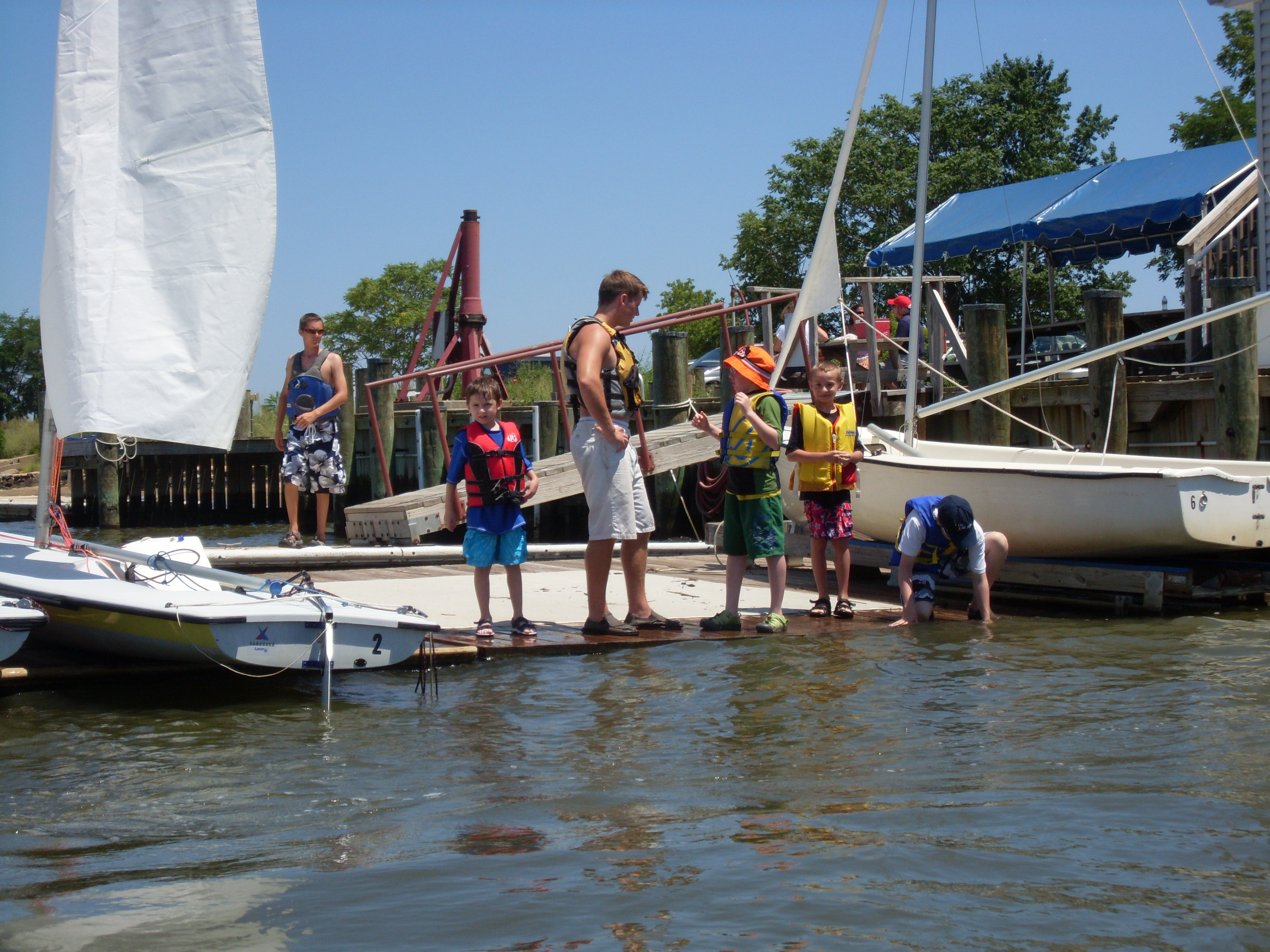
Learning the ropes
My point in sharing my memories and experiences, is to remind those of us who love sailing and time on the water, how simple it is to give that gift to young children. It is a gift that will live with many of them for a lifetime. Not only will it bring joy, but also teach self-reliance, new skills, teamwork and other important life lessons about the value of natural places and clean water. Focus on the joy, the rest will come along.
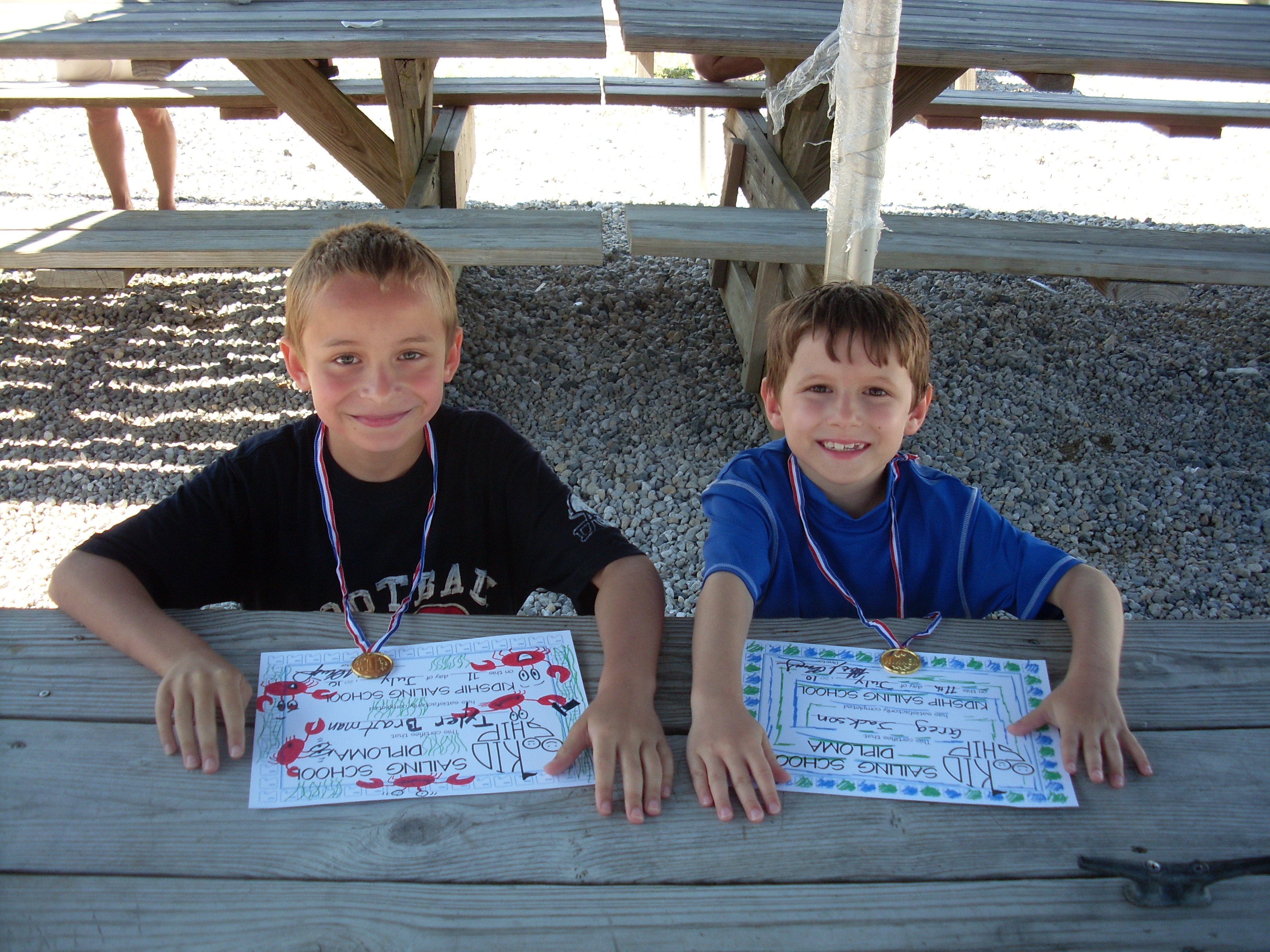
Graduation!

 chesapeaketidings & more..