Skip to content

Posts from the ‘SAILING STUFF’ Category

Community matters

As one who lives quite far removed from the waters he sails on, I connect to the local sailing community mostly by a common love of things nautical. Because of geography, only intermittently do I wander the Eastport streets and hang out in the marinas and watering holes frequented by my fellow sailors and local denizens. Those normal routines for local folks help define a sailing community. Us sailors who live some distance away seek other connections.

When friends share a day’s sail or a longer cruise – or just the telling of it, there is no distance between us. Community ties are strong, and the fabric of the community is strengthened by our common experiences. These connections are typically ingrained and pervasive such that most of us give it not a bit of thought.

I think about this because a sense of belonging is a fundamental human need. Perhaps it has its origins around the fires now distant in time, when being part of the clan meant survival. Absent a connection to community, even today, we often feel some subtle unease. So, I wonder about ways in which the sailing community in particular fashions ties between us that benefit both the individuals and the larger community.

Many interconnections and commonalities draw us together. We join local clubs – often several. We participate in organized activities both on and off the water. Some spend time on internet forums where we can share stories and information. Our leaders provide examples to follow (or not), and we share goals such as the creation of a sailing hall of fame. All give form and substance to our community.  The dividends are apparent when we unexpectedly find old (or make new) friends at distant anchorages, receive help online to some puzzle with our boats, or guidance for a difficult passage or harbor entrance, or just a helping hand with dock lines. How close a community it feels when a marina manager remembers you from one overnight there two years previous. Some wander singly around the globe to test skill and endurance or feed the soul, but most of us find our satisfaction in the company of other sailors.

Important, and woven into those many ways in which we nurture our sense of community, is how we treat our fellow sailors – friends and strangers alike.  If we are welcoming, helpful and respectful we nourish our connections. If otherwise, we create tensions that weaken them. The courtesy with which we treat others is anything but common. Even the small wave to a passing boat is part of the glue that keeps us together as a community of sailors, and feeds that fundamental need to belong.

While I’m not a fan of bumper stickers, I do smile at some, sometimes curse at others, but always nod in agreement with the one that says ‘Choose Civility’.  At a minimum, that is good advice for how to treat others on and off the water – should I say ‘even power boaters’? 🙂
Sailing to a Pig Roast

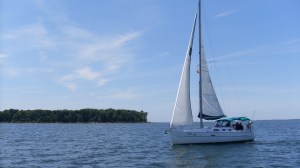
What a great reason to sail to the DNR camp on the Wye River – good music, good food and good company! And, it was an outstanding sail over. We slipped the dock lines about 0900, had the main sail up before we left the creek and did not drop sail till we were within a few hundred yards of the anchorage.

Teri Lyn just astern on Eastern Bay

What started as very light NE wind, slowly built to 8-14kts giving us SOG of 5 – 6.5Kts on a comfortable point of sail down the Bay and up Eastern Bay around the point back south to the entrance to Wye River.

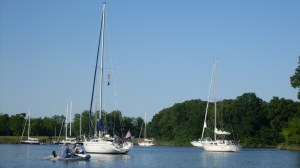
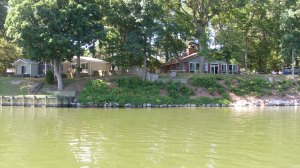
Wye River DNR Camp

After a bit of a shuffle with anchor boats, we built a 6-boat raft nose to toes and had lots of great company.

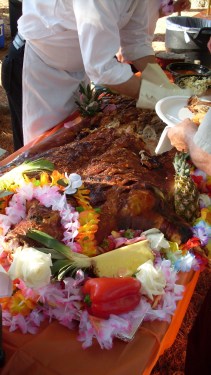
The on-shore festivities got under way with a pig roast and all the fixing along with live music. Some of the revelry extended well into the evening making for a slow morning to follow.

A great treat!

We paid for the trip down with a hard slog against adverse tide and wind.

After a long beat across the Bay and a tack back, making little progress north we fired the engine and motor-sailed north past Thomas Point until we cleared Tolly Point. Then it was an easy run to home.

Click on the link to see the SPOT track

https://www.findmespot.com/spotadventures/index.php/view_adventure?tripid=304629

Doesn’t get much better!

Forecast:  winds 5-10kts from the south with increasing clouds and chance of rain.

What we got: 10-18kts SE and blue sky.  A near perfect day for sailing!

With good crew (Dane), we left the slip about 10AM and had sail up before clearing Back Creek and headed across the Bay in a steady 10-12kts. Winds gradually strengthen to 15-18kts prompting a reef in the main and shortened head sail – still making 5-6kts – occasionally faster.

About an hour out we sailed through one of several on-going races getting some vocal direction from one of the young participants. She clearly wanted us out of her way! We cleared her course and didn’t cause her to slow down. It was a pretty sight to be surrounded by a dozen or more small one-design racers.

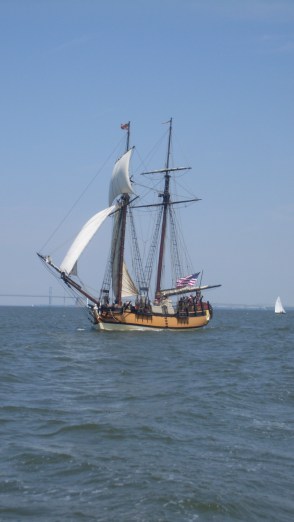
About that time we spotted the Sultana headed in from the Bay Bridge and changed our course to sail by. For the next hour our course crossed the Sultanas making for some nice picture opportunities.

After a pass through Spa Creek anchorage about 3PM we headed back to the slip. On approaching the turn into my branch, we encountered two young men stretched out on a dingy paddling their way up the creek. We drifted alongside to see if they were OK – seems they ran out of gas. So, we took their line and towed them the rest of the way to their dock, then returned to the slip.

All in all a great sail and interesting day, but not quite over. As were finishing getting the boat secured and everything stowed. Another crew from the SOS club joined us for ‘happy hour’ followed shortly by my slip neighbor and his crew. A pleasant end to a great day!

Click on the SPOT link to see the days course…….

A Primer on the Volve Ocean Race

Here’s a GREAT STORY and a look at all the technology behind watching off-shore sailing/racing! You won’t want to miss watching the videos! $10 million boats just for a start — click on the link…….

http://www.fastcompany.com/1836820/what-an-elite-niche-sport-can-teach-other-sports-about-winning-new-fans?partner=gnews

PUMA 1st on leg to Miami (VOR pic)                                 

CAMPER 2nd  (VOR pic)

Some thoughts on water, climate and our choices

If you aren’t giving serious attention to matters that affect the waters of our planet, perhaps you should. The water world is a constantly changing place. Those of us who sail on it should be intimately aware of that, and also of the critical importance of that resource for its quantity. distribution and quality.

Whatever you think about changing climate and its causes, the documented warming trend and rising sea level warrants your attention. Increasing ocean temperatures and receding polar ice cover are not trivial changes. The implications for the sailing community are substantial – not necessarily all bad. Frankly, I could use a bit more water depth at my slip. Costs that the Corps of Engineers bear to dredge and maintain navigable commercial channels might go down. But, fixed docks could be submerged and many marinas with them. As a cautious person, I think I’d be building floating docks right now – just in case.

More important are the predictions for increasing frequency of weather extremes. Consider that more named storms means more costs to BoatUS for the haul outs they subsidize, and the likely increase in insurance costs. The winter of 2012 brought exceptional warmth to much of North America, while Europe experienced among the coldest on record, with remarkable snow accumulations. Long-standing records fell at both ends of the spectrum. In the mid-Atlantic region, which harbors many thousands of boats, it was mostly a waste of effort to have winterized those boats. Sub-freezing temperatures occurred only briefly, and little if any ice resulted from the occasional dips south of 32F.

Governments at all levels have, or are beginning to develop, plans to accommodate these predicted changes. Changes may be especially troubling to communities like New Orleans that lay at or below the current high water mark, but also to all the coastal communities with many economic ties to their waterfronts.

That we have the ability to affect water quantity and quality on a very large scale should be clear. We’ve caused rivers to run dry, the Aral Sea in the USSR has gone from the second largest sea in the world to a desert – ironically for the sake of agricultural production.  Many lakes and rivers are simply not safe to swim in. Close to home, living resources in the Chesapeake Bay have been reduced substantially from historic times with the loss of associated economic benefits. On a positive note, we can and have stopped, and even reversed, some of these trends which demonstrates our ability to have large scale effects on natural systems.

It’s not a time to follow the motto for the intellectually uncurious – ‘What, me worry?’  But worry is only constructive if it leads to effective action.  Constructive response is what is called for if we’re to make sensible plans for a possible future. Let’s agree that changes are happening, that there are good reasons to believe that the trends are real and may well continue at least long enough to produce some unpleasant outcomes. If so, contingency planning for predicted outcomes is prudent.

Given the magnitude and complexity of the issues, what should/can we do about it personally? For most of us it means lending support to, or voting for those who will make the decisions. With that comes personal responsibility to be sufficiently educated about the issues such that we can lend informed support. While doing so, be aware that philosophical and political biases often lead to unwise solutions, and partisan stereotypes about solutions to and views about environmental challenges are often not good indicators of effective policy.

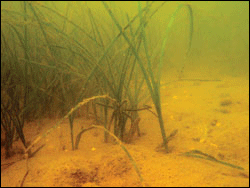
Grass and Bay quality..

The Chesapeake Bay Program recently released a report on the extent of underwater grasses – an important indicator of Bay health.

(pic from MD Sea Grant Program)

From the report ….

“Underwater grasses provide significant benefits to aquatic life and serve many critical ecological functions in the Bay and its tributaries, such as:

  • Providing shelter for young striped bass, blue crabs and other species

  • Improving water clarity by helping suspended sediment particles settle to the bottom

  • Adding oxygen to the water

  • Reducing shoreline erosion

Scientists believe that having more grasses in the Bay and rivers will dramatically improve the entire ecosystem. The expectation is that as nutrient and sediment pollution decrease and water clarity improves, underwater grass acreages should expand. Experts closely monitor underwater grasses because their well-being is dependent on good local water quality.  Therefore, their abundance is an excellent measure of the Bay’s health.”

For more, read the full report at http://www.chesapeakebay.net/indicators/indicator/bay_grass_abundance_baywide

Safe and now dry……

As the first order of business, I tell every new crew on my boat that there are five holes in the bottom, where they are, and what to do if one leaks.  Good practical information it seems, given the past weekend’s experience. Fortunately this was not the costly option…….

When opening the valve to drain the galley sinks, the handle came off in my hand and a small but steady stream of creek water began running into the bilge. After a scramble for a plug and tape to hold off the worst, a call to Diversified Marine Services brought prompt attention. [kudus for DMS!] We secured the leak, and the technician came back in the morning to replace the valve – now that was an interesting process with the boat in the water.

First, remove the valve and there’s a 1 inch hole. May not seem very large, but that creates a geyser about 1 foot high until the new valve is in place ( a several gals/min rate). Then, in order to turn the new valve onto the thru hull fitting, the handle must be opened to clear adjacent equipment. So, with every turn, the valve is opened again with another temporary geyser.

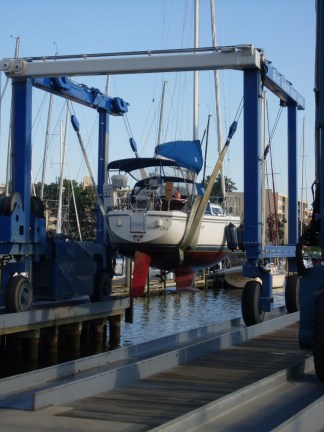
The good news is the new valve is in place and the 6 or so gallons of water that remained in the bilge got pumped out and all dried out.  Of pure coincidence, the sail that was scheduled was cancelled for lack of wind. I’d hate to think I’ve used up my allotment of good luck all in one weekend 🙂 Incidentally, the technician suggested hauling (see pic above) should this happen again! 

Stay tuned, next sail is in two weeks to the Wye River for the weekend ….

Good news from the Bay Program

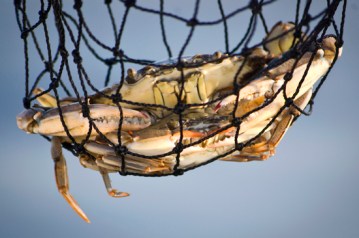
Blue Crab population hits a 20 year high!

—  (from Chesapeake Bay Program)

The Chesapeake Bay’s blue crab population increased 66 percent in 2012 to its highest level since 1993, according to the annual blue crab winter dredge survey conducted by Maryland and Virginia.


The enormous increase was fueled by a “baby boom” – an almost tripling of the juvenile crab population, from 207 million last year to 587 million. This figure smashed the old record of 512 million juvenile crabs set in 1993.

Overall, the Bay’s crab population has risen to 764 million, more than triple the record low of 249 million set in 2007. That deep decline set in motion four years of concentrated efforts to rebuild the stock.

“Just a few short years ago, the future did not look bright for our blue crab population,” said Maryland Gov. Martin O’Malley. “Our female crabs were being overfished, and our fishery was at risk of complete collapse. We teamed up with our neighbors in Virginia and at the Potomac River Fisheries Commission to make the tough choices, guided by science, to reverse that population decline.”

Bay-wide, the crab harvest has increased substantially since 2008, when 43 million pounds were caught. In 2011, an estimated 67.3 million pounds of crabs were harvested from the Bay.

Not all news from the survey was bright: the number of spawning-age females dropped by roughly 50 percent to 97 million. However, this figure is still above the health threshold. Maryland and Virginia will work together to produce a management strategy to avert another stock decline for this segment of the crab population.

Visit the Maryland Department of Natural Resources’ website for more information about the winter dredge survey and the 2012 blue crab figures.

Virginia CZM Progress

Daily Press OPED:  Doug Domenech: Investing in the Future of our Coast April 22, 2012

This Earth Day is an opportunity to celebrate an important anniversary. For the last 25 years, the Virginia Coastal Zone Management (CZM) Program, a network of state and local partners funded through the federal Coastal Zone Management Act, has been finding innovative and resourceful ways to preserve the Commonwealth’s abundant coastal resources. Their investments have helped revitalize the unique character and ecological health that defined Virginia’s coast centuries ago. Almost 5,000 acres of eelgrass now wave with the ocean tides on the seaside of Virginia’s Eastern Shore due to the success of the Virginia CZM Program’s multi-partner initiative and $3 million investment, the Virginia Seaside Heritage Program. Devastating storms in the 1930s wiped out most of the region’s eelgrass beds and the bay scallops that rely on them. Today, scallops have been reintroduced to the restored eelgrass beds and this critical marine ecosystem is once again thriving. It proves just how dramatic restoration efforts can be if we maintain high quality coastal waters. The Virginia CZM Program launched the Virginia Oyster Heritage Program in 1999, jump-starting the impressive oyster recovery announced on February 7th by Gov. McDonnell. Through $1.5 million of Virginia CZM Program’s federal funding and additional private and public oyster restoration funds, the program restored 14 one-acre oyster sanctuary reefs and 500 acres of adjacent harvest areas in the Rappahannock River, and more acreage on the Seaside of the Eastern Shore. In 2007, the Virginia CZM Program reconvened the Oyster Heritage Program partners and together they developed the innovative strategy that combines harvest rotation with preservation of broodstock sanctuaries on the Rappahannock River – a strategy that has become the model for other oyster restoration efforts in the Chesapeake Bay. Beaches and dunes are our best natural defense against storms and flooding. Inventorying and protecting these critical coastal resources has long been a focus of the Virginia CZM Program. The program’s investment in a detailed analysis of Virginia’s beaches and dunes led to a change in the Code of Virginia in 2009 that significantly expanded protection of beaches and dunes to all coastal localities. Ongoing funding from the program also supports the installation and monitoring of Living Shorelines, a natural technique that can protect property owners’ shorelines and create healthier habitats for fish and other wildlife. The Virginia CZM Program has distributed more than 54 ecotourism grants in the last 25 years worth more than $1 million — funding construction of public access amenities such as nature trails, canoe and kayak floating docks, wildlife observation decks, an Ecotour Guide Certification Program, the 20 year old Eastern Shore Birding & Wildlife Festival, the coastal portion of the Virginia Birding and Wildlife Trail, and the Eastern Shore Seaside Water Trail. Tourism is a major driver in Virginia’s economy, and ecotourism is one of the fastest growing sectors of that industry. It connects people to the environment and instills an appreciation of our natural resources. Providing public access and investing in the conservation of special coastal places go hand in hand. The Virginia CZM Program’s acquisition of 3,537 acres has helped grow ecotourism in the state while also protecting sensitive coastal habitats. In Northampton County, the program helped expand Kiptopeke State Park and create the Magothy Bay Natural Area Preserve. Tourism revenue in the county increased 11.2 percent in 2011, the highest jump in revenue in the state. What is particularly impressive about the Virginia CZM Program is how it has done more with less in its 25-year history. When adjusted for inflation, the funding the program receives through the National Oceanic and Atmospheric Administration has decreased by 48 percent since 1987. During the same time, Virginia’s coastal population grew from about 3.6 million in 1986 to about 5.1 million in 2010 – a 41 percent increase. This means more people, placing more pressure on finite coastal resources. How does the program remain effective? The key steps are aligning and leveraging resources and missions; implementing new technologies to get messages and scientific data out to coastal managers, decision-makers and the public; and relying on a dedicated staff that capitalizes on every opportunity to wisely use available dollars. The Virginia CZM Program and its partners have broken new ground in some areas and protected old ground in others. The result has been the promotion of a unique perspective on Virginia’s coastal zone. Together we can expect continued success in the next 25 years! Domenech is Virginia Secretary of Natural Resources

Copyright © 2012, Newport News, Va., Daily Press

About tax day…

About tax day each year, the SOS (Singles on Sailboats) club schedules its first weekend cruise of the season. This year, as usual, the cruise destination was Pirates Cove Marina in Galesville, MD. The marina is sheltered in a cove off West River just a short run from the main stem of the Chesapeake Bay (Latitude 38° 50′ 35″ Longitude -76° 32′ 21″).

Valinor’s crew for this cruise included Rennie, an SOS member, and Roger, a friend from Maine. Roger is a retired naval architect and is just now on his return trip to Maine from Florida. Roger has made this trip solo and hosts a forum recounting his travels on Strider – a kindred Tolkein spirit to Valinor.

Great crew always makes for fun and interesting trips!

We slipped our dock lines early Saturday morning at my home port on Back Creek in Eastport. The weather promised an intersting sail, with  10-15 kt winds blowing from the south. Sky was clear and sunny, but the forecast was for rain and stronger winds (northerly) coming overnight.  The spot track (see link to the right) shows our course sailed, but pictures don’t tell all the story J

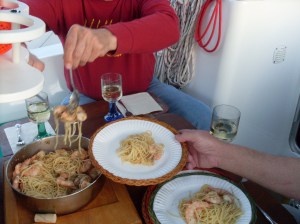
The cruise really began Friday evening with a deliciuos pot of shrimp scampi whipped up by Roger, with a nice white wine!

The sail down was outstanding. Three upwind tacks took us to Thomas Point making 4-5kts close hauled. After passing Thomas Point lighthouse we were on a beam reach making 5-6.5kts all the way to Pirates Cove – doesn’t get much better!

Saturday evening was a group dinner, some live music, and for my boat, an early night anticipating a less fun trip back on Sunday.

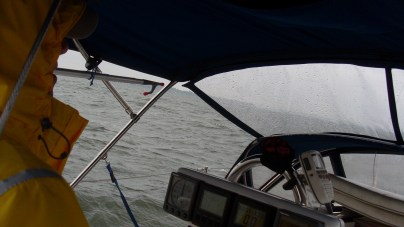
We were up early and underway a bit after 7am. The weather forecast called for north winds 10 – 15 gusting to 20kts, and increasing later in the day. We chose to get ahead of the stronger opposing winds. Still we found 2-3ft short-period waves and 15-20kt wind mixed with frequent rain showers – the price we paid for Saturday’s ideal sail!

Still, any day on the water…………