Posts from the ‘SAILING STUFF’ Category
Feb 17
Feb 10
Climate change strategy available for review and comment
edited from DOI press release……
In 2010, Congress called for a national, government-wide strategy to address impacts of changing climate, and directed the President’s Council on Environmental Quality and the Department of the Interior to develop it. CEQ and Interior brought together a partnership of federal, state and tribal fish and wildlife conservation agencies to draft the strategy. More than 100 researchers and resource managers from across the country contributed to the draft document.
That draft titled “National Fish, Wildlife and Plants Climate Adaptation Strategy” is available for public review and comment through March 5, 2012. It can be found on the web at www.wildlifeadaptationstrategy.gov
The strategy creates a framework for unified action to safeguard fish, wildlife and plants, as well as the important benefits and services the natural world provides, including jobs, food, clean water, clean air, building materials, storm protection, and recreation.
Department of Interior Deputy Secretary David J. Hayes noted: “The impacts of climate change are already here and those who manage our landscapes are already dealing with them. The reality is that rising sea levels, warmer temperatures, loss of sea ice and changing precipitation patterns – trends scientists have definitively connected to climate change – are already affecting the species we care about, the services we value, and the places we call home. A national strategy will help us prepare and adapt.”
Author Comment: Coastal areas are especially vulnerable to changes that can affect recreational boaters, marinas and other shore-based services. It is incumbent upon the boating community to pay attention to this report, and be sure that it addresses those interests.
The draft Strategy is available for review and comment. The 45-day public comment period is from January 20 to March 5.
Feb 3
LIVING SHORELINE INSTALLED AT GREYS CREEK NATURE PARK (from CCS ‘In the Zone’)
Projects such as these highlight the importance of the many conservation partnerships at work around the Chesapeake Bay and elsewhere to restore and improve our aquatic resources.
______________________________
CCS Spotlight is a feature of the In the Zone e-mail service (see below) that highlights programs that have been developed by the Chesapeake & Coastal Service or through partnership and support from federal, state and local partners helping to advance coastal management in Maryland.
This past year, Maryland’s Coastal Program worked with DNR’s Habitat Restoration and Conservation and Engineering and Construction divisions to complete a living shoreline restoration project at Greys Creek Nature Park in Worcester County, the former Weidman Property.
The 572-acre waterfront property was acquired in 2006 by the State and Worcester County with the assistance of NOAA’s Coastal and Estuarine Land Conservation Program funds. The entire property sits at the top of the Maryland Coastal Bays in one of the most biologically diverse areas in the Delmarva region. Its natural habitat includes upland coastal forests, extensive sensitive non-tidal and tidal saltwater wetlands and several small islands just off shore…..
|
For more on this story and other projects of CCS sign up .. IN THE ZONE is a service from the Maryland Department of Natural Resources’ http://visitor.r20.constantcontact.com/manage/optin/ea?v=001Rx4RxQ1SVjZyizs9kry3Pg%3D%3D that delivers timely information, tools and resources to those who live, work and play in Maryland’s coastal zone. |
Jan 27
Making of a sailor
Close your eyes for a bit, and rewind the clock a few years, maybe more than a few for some of us, and call to memory a hot, summer day just after the rain stopped. The sun was breaking through the clouds sending bright shafts of light to ground. Mist was rising off the hot soil, and puddles were scattered in every low spot. I know what I did, but what did you do with those puddles?
For me it was bare foot time, and I stomped in about every puddle I could find relishing the pure joy of it. Then I rummaged through my collection of toys, found a boat or two and headed back to the puddles to go sailing. With imagination only found in small children, I sailed around the world, survived storms, was chased by pirates, and discovered new lands – all in the space of a few square feet of ocean that was rarely deeper than a couple inches. Thus was made a sailor.
Sixty or so years later I can still conjure up those same feelings, and occasionally that same pure joy of being on the water, under sail now with the real world within reach – at least in my imagination. Have survived storms, found lands that were at least new to me, and been chased by pirates of a sort. So, at least in some things we do come full circle in life.
My point in sharing my memories and experiences, is to remind those of us who love sailing and time on the water, how simple it is to give that gift to young children. It is a gift that will live with many of them for a lifetime. Not only will it bring joy, but also teach self-reliance, new skills, teamwork and other important life lessons about the value of natural places and clean water. Focus on the joy, the rest will come along.
Needless to say I have plans for my grandkids, and hope their parents are prepared! So, next summer when it rains, find a kid or two and together go find a puddle……..I suspect you will all experience the joy.
Jan 26
MD Watershed Implementation Plan
MDE release – http://www.mde.state.md.us/Pages/Home.aspx
The Chesapeake Bay TMDL, Maryland’s Watershed Implementation Plan and Maryland’s 2012-2013 Milestone Goals
DRAFT Phase II Watershed Implementation Plan for Public Review (January 26, 2012)
The Chesapeake Bay is a national treasure constituting the largest estuary in the United States and one of the largest and most biologically productive estuaries in the world. Despite significant efforts by federal, state, and local governments and other interested parties, pollution in the Chesapeake Bay prevents the attainment of existing water quality standards. The pollutants that are largely responsible for impairment of the Bay are nutrients, in the form of nitrogen and phosphorus, and sediment.
The United States Environmental Protection Agency (EPA), in coordination with the Bay watershed jurisdictions of Maryland, Virginia, Pennsylvania, Delaware, West Virginia, New York, and the District of Columbia (DC), developed and, on December 29, 2010, established a nutrient and sediment pollution diet for the Bay, consistent with Clean Water Act requirements, to guide and assist Chesapeake Bay restoration efforts. This pollution diet is known as the Chesapeake Bay Total Maximum Daily Load (TMDL), or Bay TMDL. MDE took part in an ongoing, high-level decision-making process to create the essential framework for this complex, multi-jurisdictional TMDL that will address nutrient and sediment impairments throughout the entire 64,000 square mile Chesapeake Bay watershed.
MDE participated in numerous inter-jurisdictional and inter-agency workgroups and committees over the last three years to provide technical expertise and guidance for developing the Bay TMDL in a manner consistent with the State’s water quality goals and responsibilities. In particular, MDE worked to ensure that the Bay TMDL addressed the nutrient and sediment impairments in all of Maryland’s tidal waters listed as impaired by those pollutants on the State’s Integrated Report of Surface Water Quality.
MDE took the lead on developing an allocation process that will enable the State to meet a key requirement for the Bay TMDL and Maryland’s Watershed Implementation Plan: the sub-allocation of major basin loading caps of nutrient and sediment to each of 58 “segment-sheds” in Maryland – the land areas that drain to each impaired Bay water quality segment – and to each pollutant source sector in those areas.
Jan 24
RBFF notes ICW Fishing opportunities
The Recreational Boating and Fishing Foundation is a great non-profit organization whose mission is to incease participation in recreational angling and boating and thereby increase public awareness and appreciation of the need to potect, conserve and restore this Nation;s aquatic natural resources.
They provide a valuable service to the boating and fishing communities…….. the following article is from their web site at http://www.takemefishing.org/general/about-rbff — take a tlook for more great info!
The Intracoastal Waterways – An angler’s paradise
Whether you’re a newcomer to saltwater fishing or a seasoned pro, the ICW offers some of the most accessible and enjoyable light tackle action in the country.
The Intracoastal Waterway (ICW) is comprised of various bays, inlets, saltwater rivers and other manmade water canals that offer boat passage and protection from the open sea. There are three separate ICW regions: the Gulf of Mexico ICW stretches from south Texas to the panhandle of Florida, the Florida Gulf Coast ICW connects Tarpon Springs to Ft. Myers, and the Atlantic ICW reaches from the Florida Keys all the way to Virginia.
ICW waters are typically calmer, and readily accessible to smaller recreational fishing boats. They’re also home to prolific schools of baitfish, as well as larger sport fish that migrate, feed, and breed there. Indeed, the ICW is the ultimate “inshore” fishery in America.
Here are some ICW fishing hotspots worth checking out with light tackle.
- Laguna Madre in Texas – A massive hyper-saline (and consistently shallow) lagoon, the Laguna Madre is a veritable factory for speckled sea trout, as well as redfish and tarpon. If sight fishing is your deal, this is a place where you can run a skiff, wade or kayak for miles, and cast at fish all day.
- Carrabelle, Florida – Fishing guides from throughout the region gravitate toward the waters around Carrabelle in the summer, because big tarpon migrate there. In the fall, the sea trout action is hot.
- Fort Myers, Florida – Try fishing for snook in the evening from a flats skiff in the boat canals. Fly fishing is a particularly rewarding approach; use a purple “Puglisi Peanut Butter” fly with an 8-weight rod.
- Miami Beach, Florida – Believe it or not, anglers have been known to hook 100-pound plus tarpon by casting plugs (and flies) in and around Governor’s Cut, right where the cruise ships pass by. It’s also fun to catch pompano in this area. But be sure to pay attention to other boat traffic when fishing here.
- St. John’s River, Florida – Northeast Florida has a wide array of canals, rivers and channels that are loaded with some of the best populations of sea trout, jacks and redfish in the country. This is a kayak fisherman’s paradise.
- Hatteras, North Carolina – Fishing on the inside of the Outer Banks offers some of the best opportunities to chase redfish in shallow water. Try slowly retrieving a golden spoon with a light- or medium-action spinning rod.
The number of species from striped bass to snapper, black drum to sheepshead (and everything else mentioned above) comprises only a fraction of a list longer than any angler can tackle in a lifetime. And the approaches and techniques you can use are only limited to your imagination. So what are you waiting for? Give it a try.
Jan 17
Imagine clean waters
If I have your attention – come on back for observations and views about current conservation issues as this site grows.
Jan 13
What to do with winter……
Clearly there are all sorts of things to do, especially withholiday business behind us. Shovel snow for one if you live in that part of theworld. Cut, split and stack wood for the wood stove or fireplace. As they say, it warms twice. I can attest tothat from personal experience. Do those chores around the house that got putoff during the important (sailing) season – and explain at home why that’s so.The explaining could be a serious time sink depending on the views of others inthe household. I’m sure you can add to this short list with many imaginativetasks from your – and others’- to do lists. However, I’m inclined to be forwardlooking, and specifically to look past this current inconvenient weather. Afterall, it is only a few short weeks till Spring sailing weather.
Days are gettinglonger now, and the pace of that change will accelerate soon. We’ve turned thecorner on day length, and very soon will do the same with temperatures.
So, on a more positive note I’m planning and preparing forthe return of the important season. That means attending to all the boat tasks– repairs and improvements – that didn’t get done when being on the water wasmore compelling. It’s actually very satisfying to complete those jobs that havebeen nagging at you for several months. In fairly short order:
-
I managed torepair some seams on my dodger and bimini – and learned another skill in theprocess.
-
Re-assembled the bimini framework and began acquiring the parts neededto add supports in anticipation of installing a solar panel or two on top.
-
Built a more convenient companionway door (well almost done).
-
Washed dockingand other extra lines that laid in the locker most of the past season.
Yet tobe accomplished is adding chain and new rode to anchors, add a new anchor toinventory and finish construction of ‘glass’ side panels to enclose the cockpiton those inclement days.
To add challenge and excitement to this off-season process, Ihave been mapping out my season schedule, noting organized club event and othersailing opportunities on my Outlook calendar. Of greater interest is pouringover charts to plan more extended cruising to new places and imagining findingquiet anchorages yet to be visited. Already I have at least two 10-day trips onthe calendar, as well as preparations for heading south next Fall before allthis cold weather arrives again. That will make my next winter “to do list”quite different!
Between chores it is a delight to follow the travels of sailing friends who allow us to track their progress via SPOT trackers, and to livevicariously thru their frequent Blog posts with pictures and descriptions ofplaces, events and the occasional interruptions of groundings and other minormishaps. Here’s one example of a friend who left Portland, ME last October andis now in north Florida — http://forums.sbo.sailboatowners.com/forumdisplay.php?f=142
There’s much to belearned from those who are going places you have not been but intend to go. So,productive time is spent absorbing that experience and weaving it into our owncruise planning.
Finally, and not the least of opportunities, are all theseminars and other activities offered by clubs and the sailing industry. And Ijust heard we will have a Spring boat show in Annapolis (April) to add to theearly season fun – and wreak havoc with our boat budgets.
So, get busy with thechores, and look forward to seeing you on the water soon!
Dec 15
Till Spring…….
Winter always feels ‘bare’ … trees have lost their foliage, boats are soon striped of canvass and sails, and snow lurks around the corner………

enjoy the quiet time, have a great holiday season and we’ll see you in the Spring!
Nov 29
Lighting up Christmas!
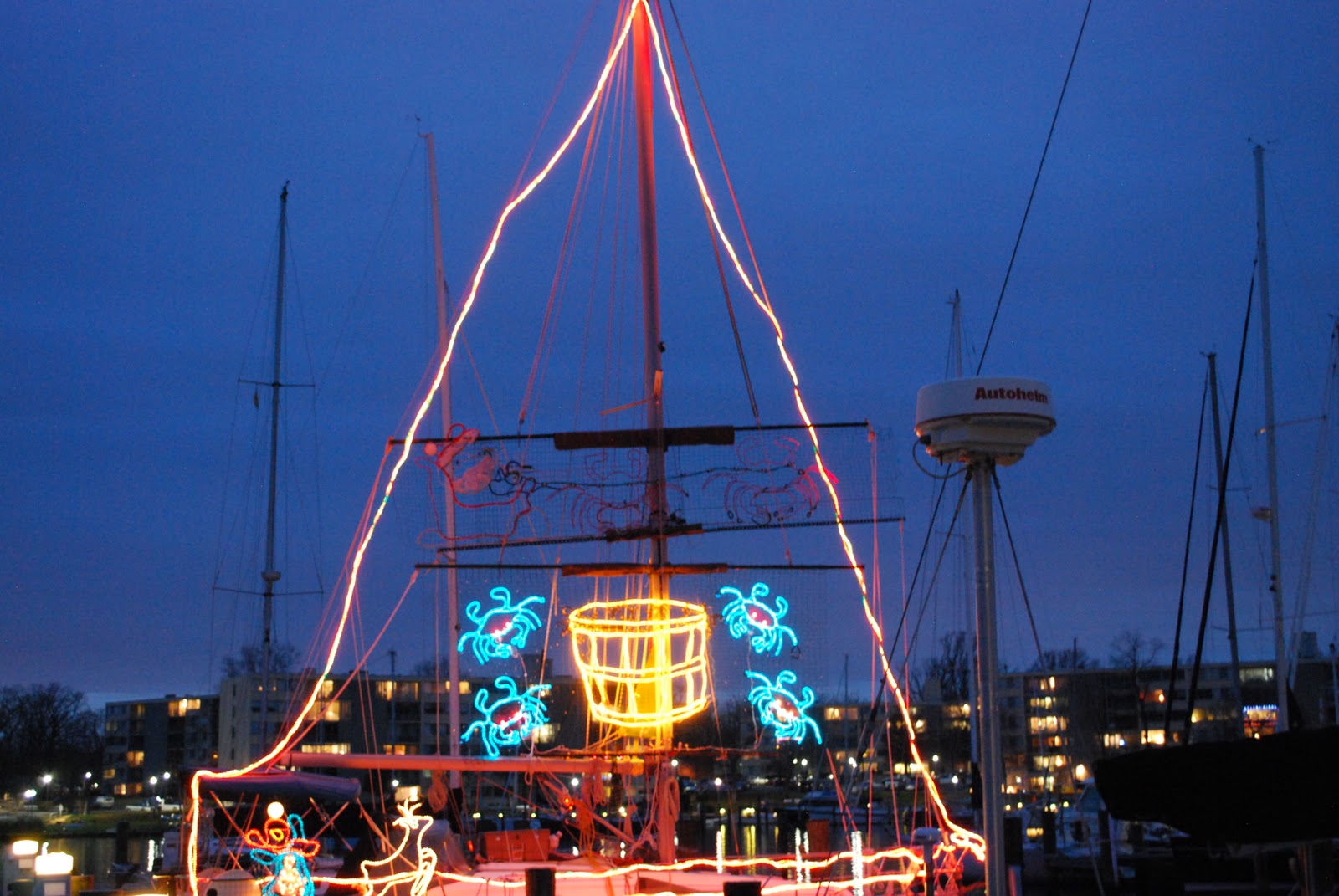
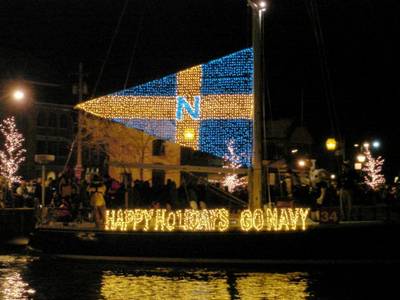
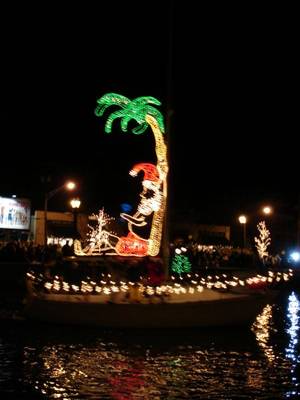
As Christmas approaches, preparations for theannual Annapolis Parade of Lights are well underway. This annual evening eventin Spa Creek attracts over two dozen boats both power and sail, each with elaborate Christmas themedecorations presented in multicolored lights. Boats circle Spa Creek above andbelow the bridge linking Annapolis to Eastport. The bridge and other areas witha view of the creek are filled with folks who brave the usually cold evening toenjoy the colorful boats.
Many boating clubs enter their best designs to compete for prized titles. Singles on Sailboats (SOS) has entered each year for 15 years, and received prizes in many of those years.
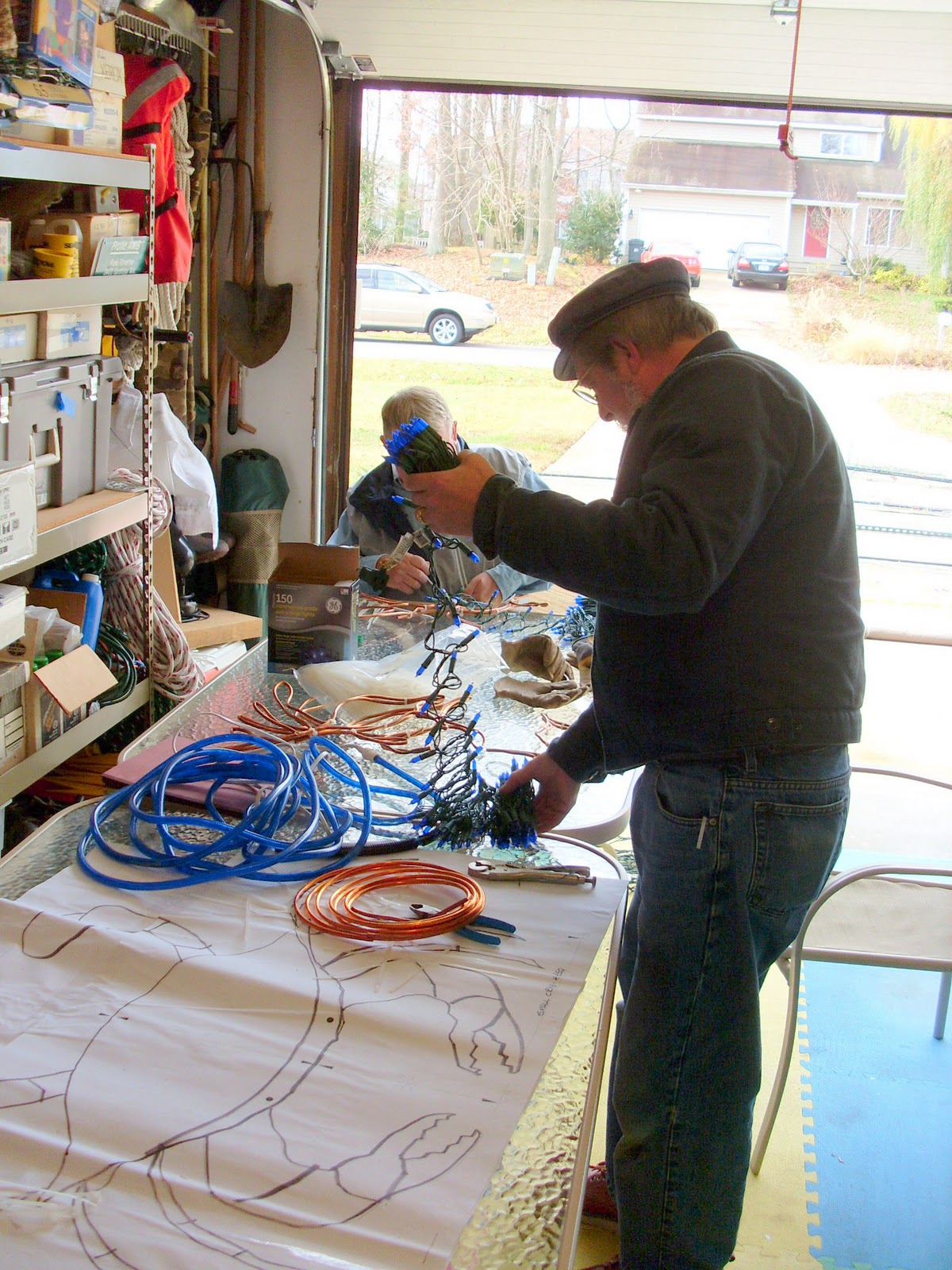
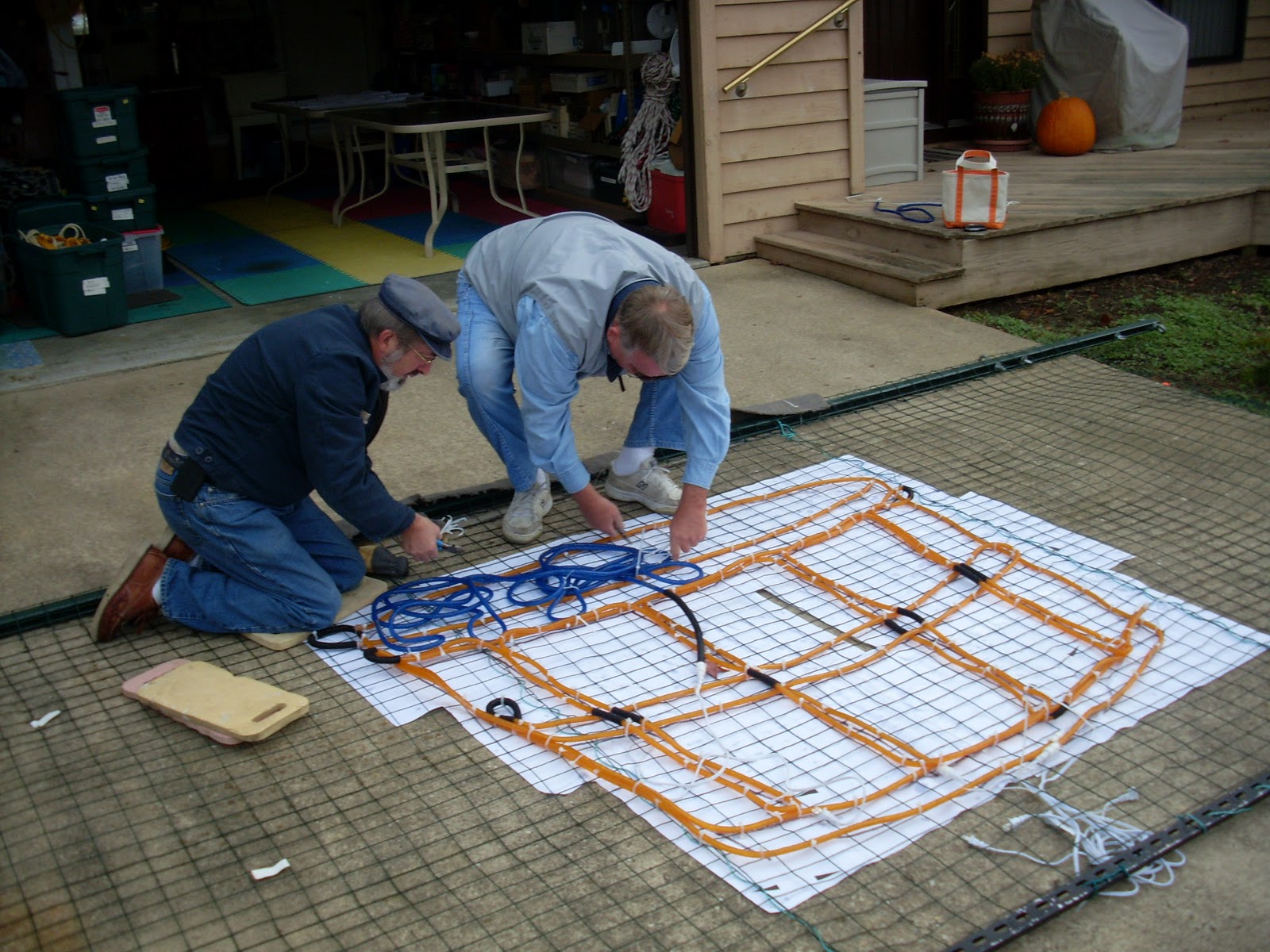
Lest you think this is a simple undetaking and just means stringling some lights on a boat – here’s a brief look at the preparations required.

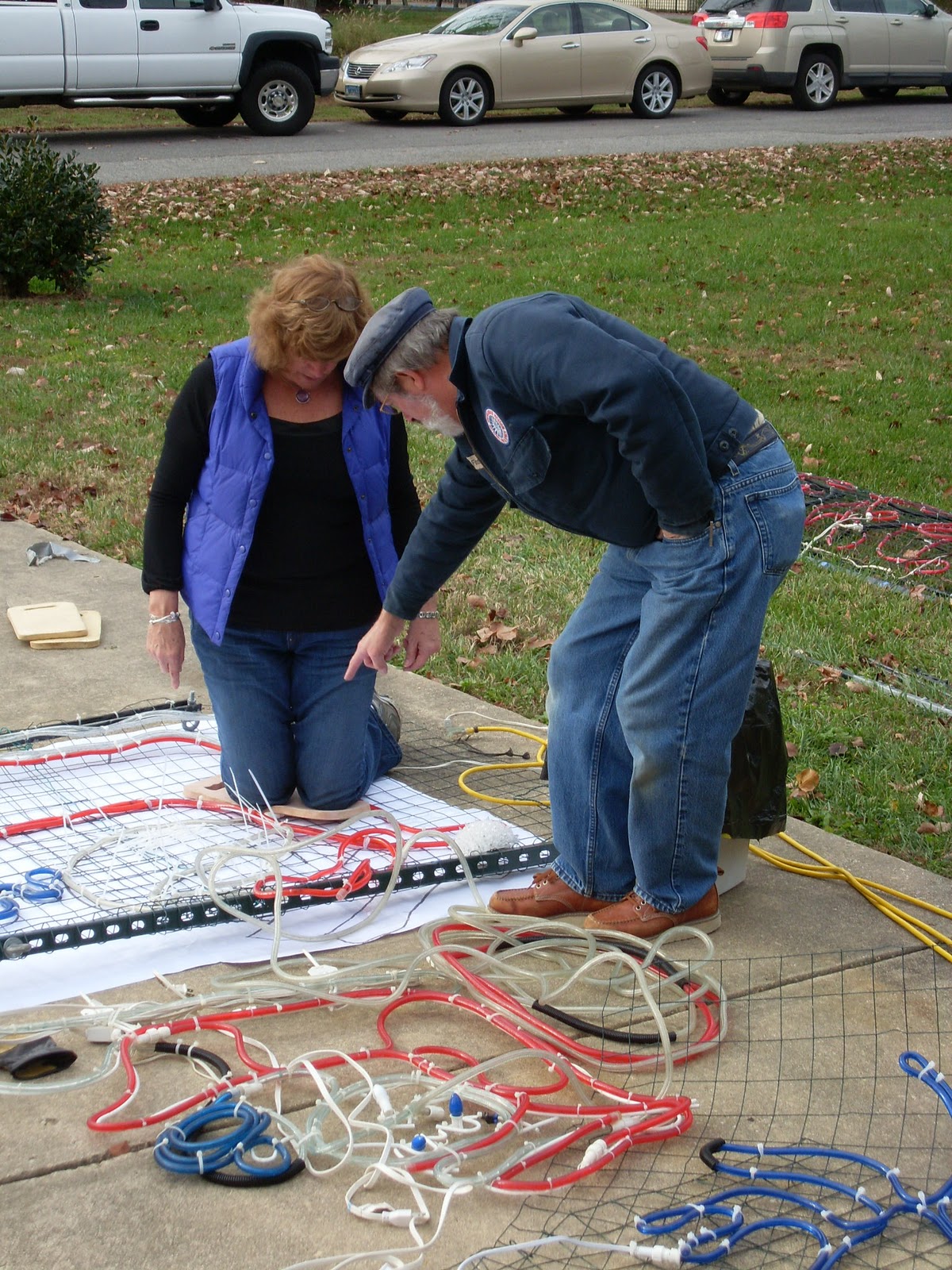
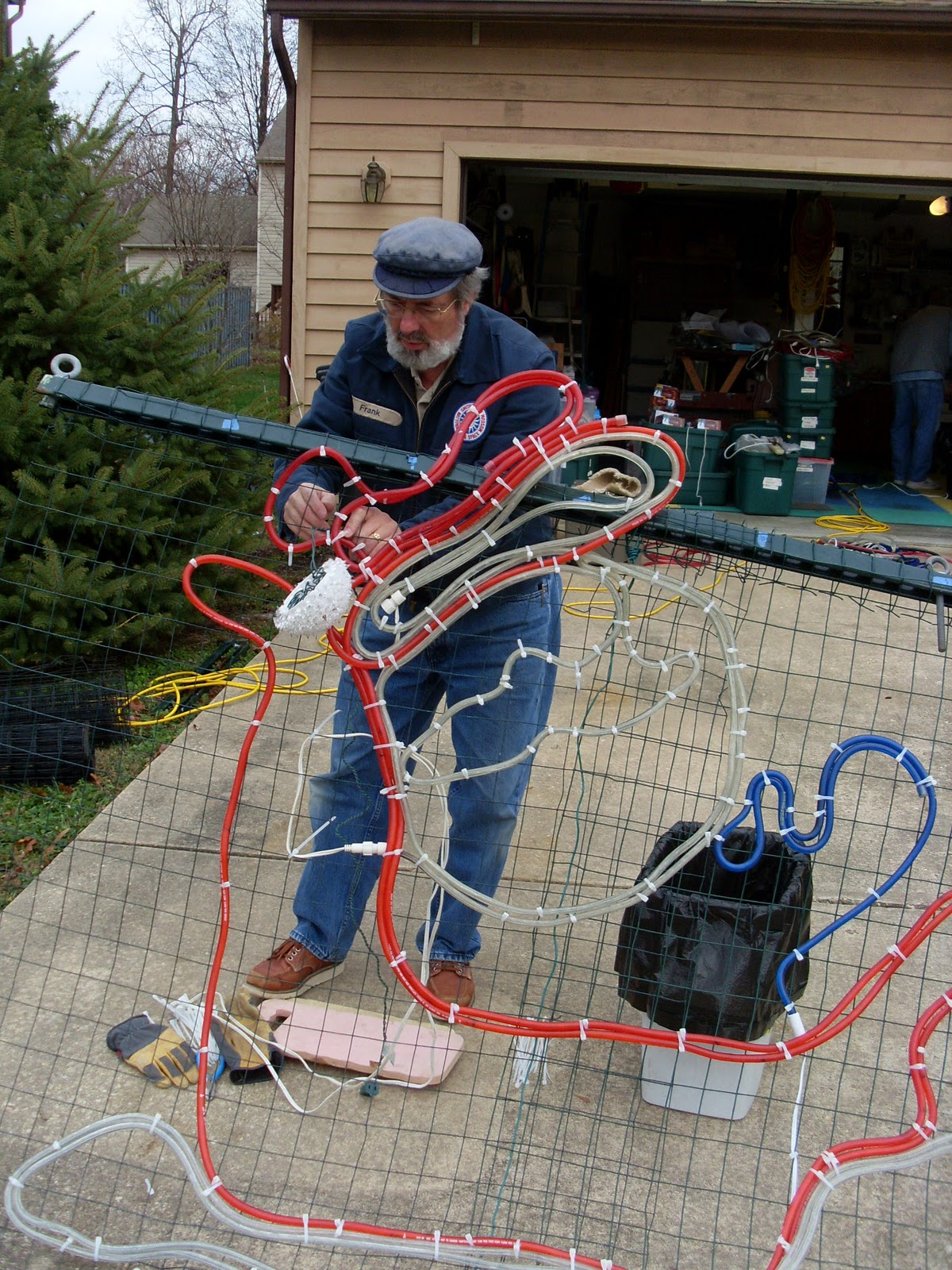
First, someone conceives of a novel design (with all the engineering and electrical considerations) and prepares full scale drawings. Frank Florentine, a professonal lighting engineer and SOS member, provides these volunteer services.
Light strings are checked to besure they’re in working order, and the representation of the design materializes as planned.

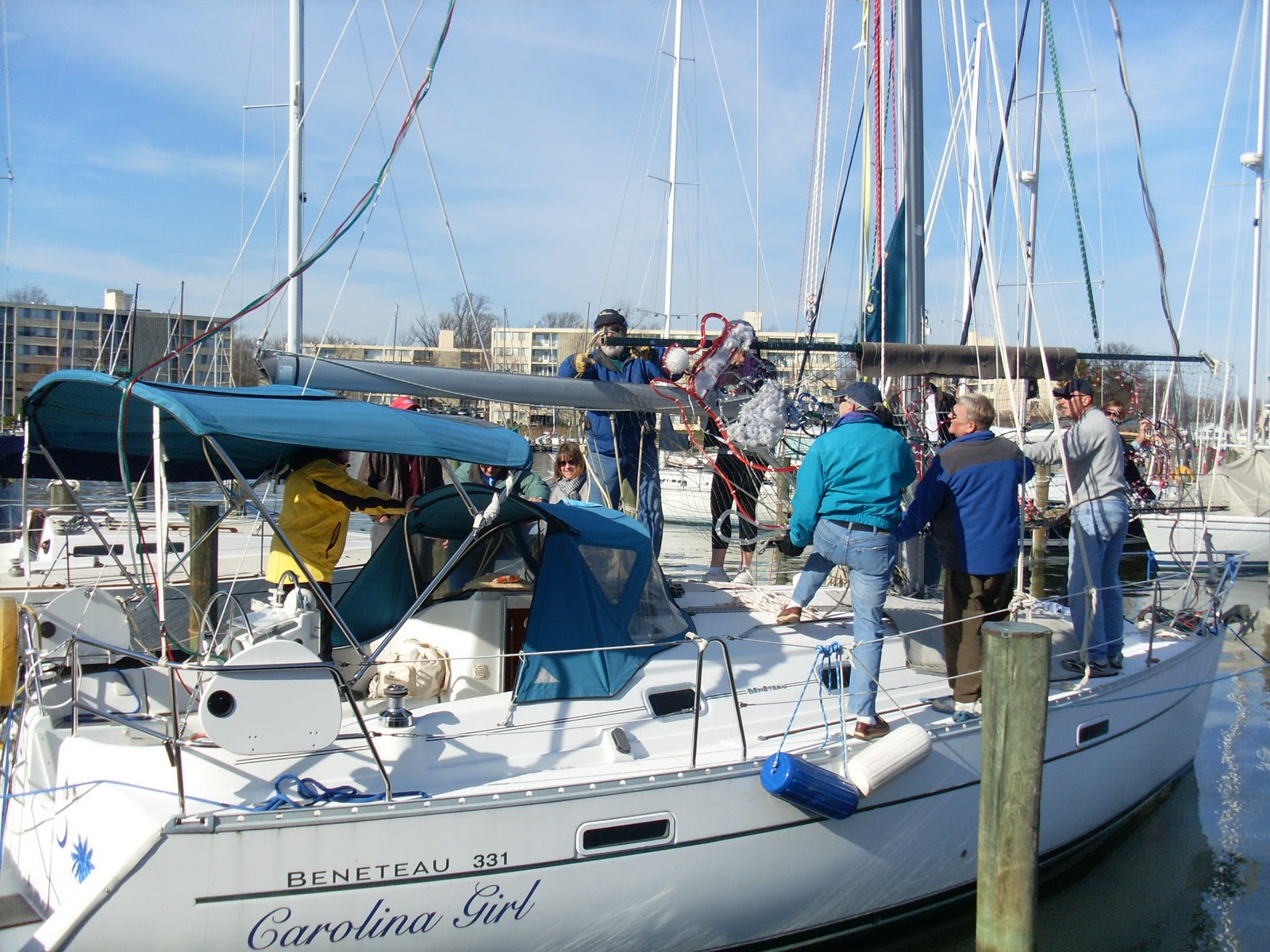
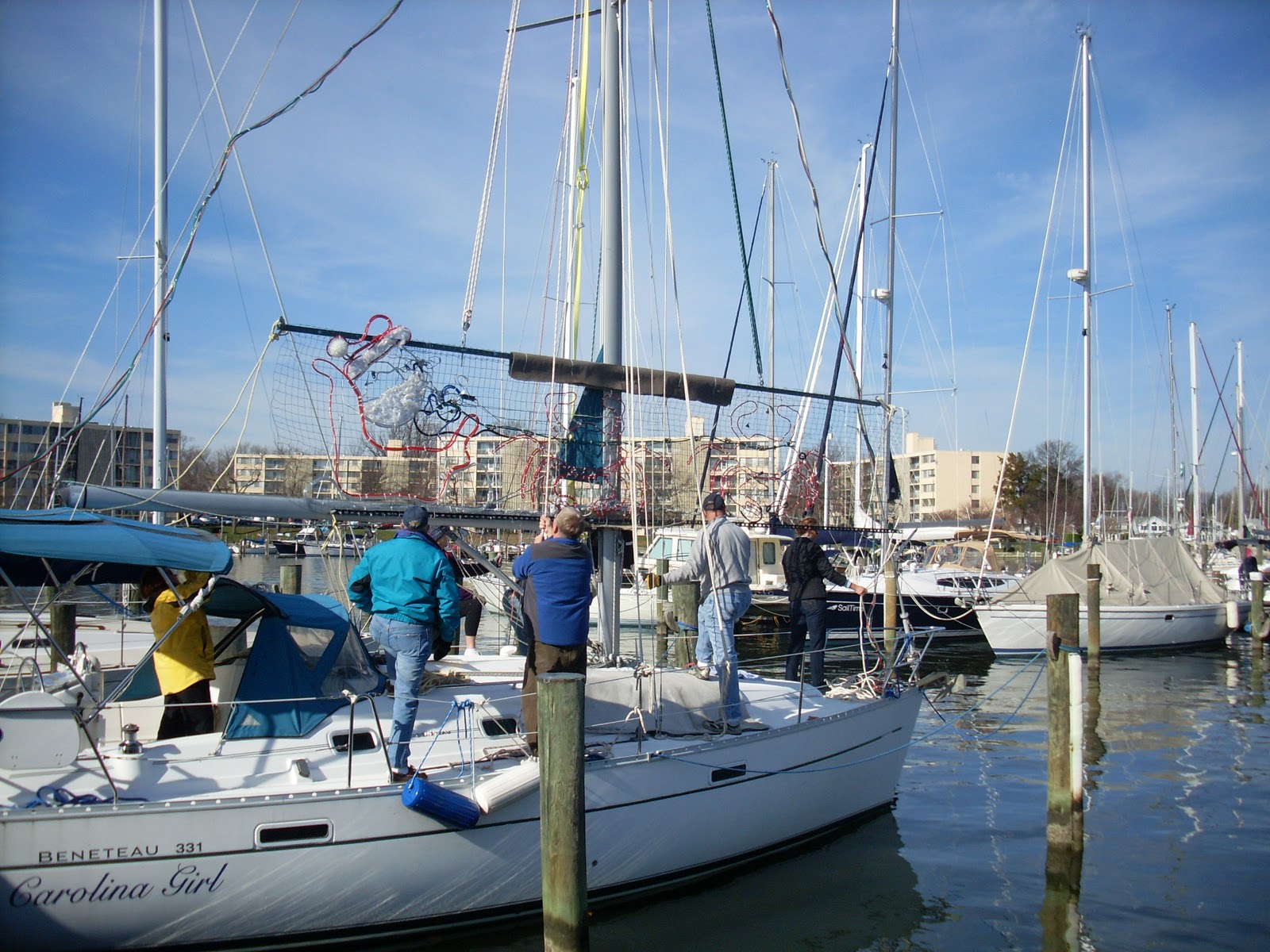
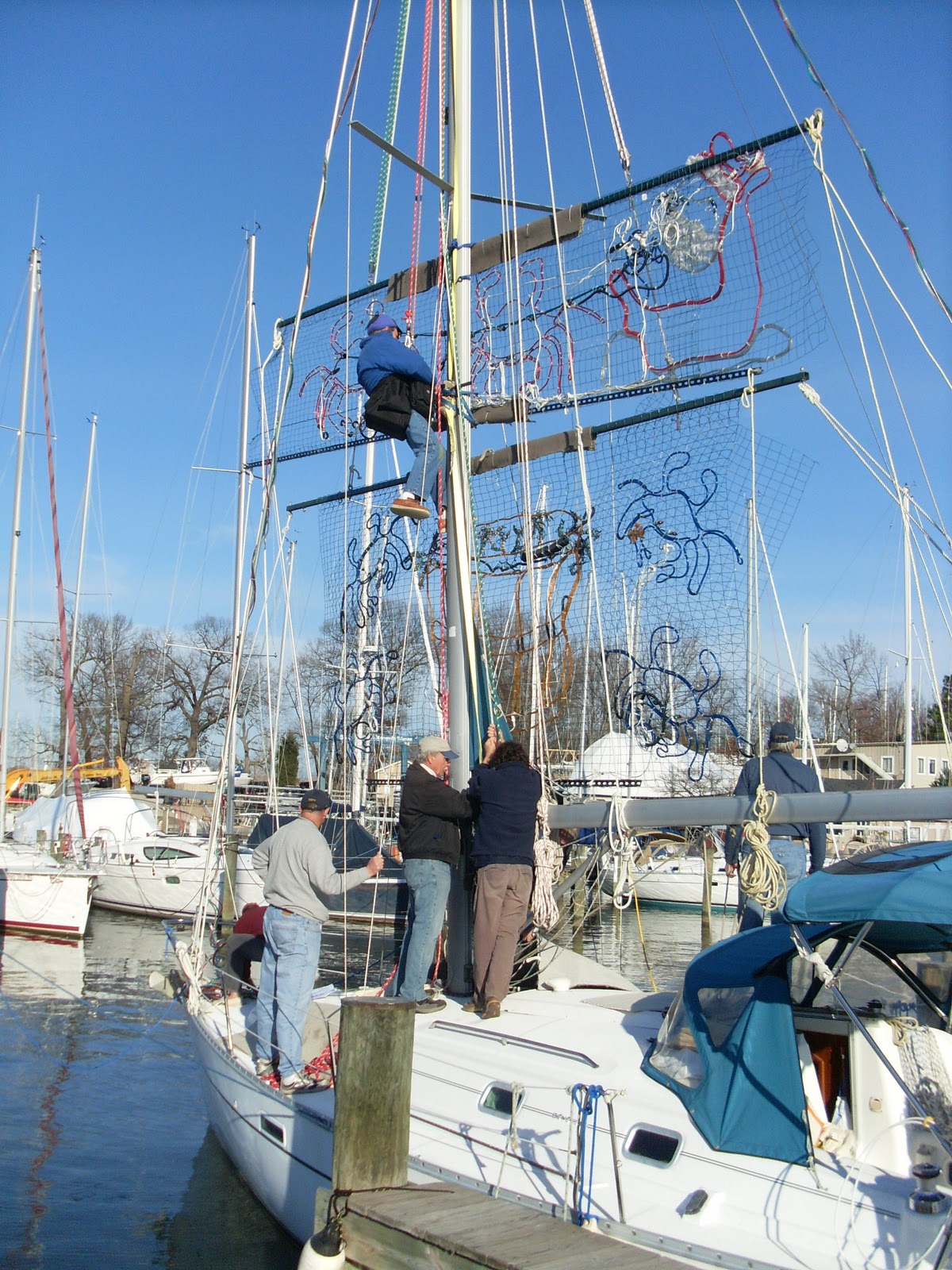
When all is completed, it gets hauled to theboat and rigging begins to safely raise the completed designs up the mast andattached wherever else is needed….
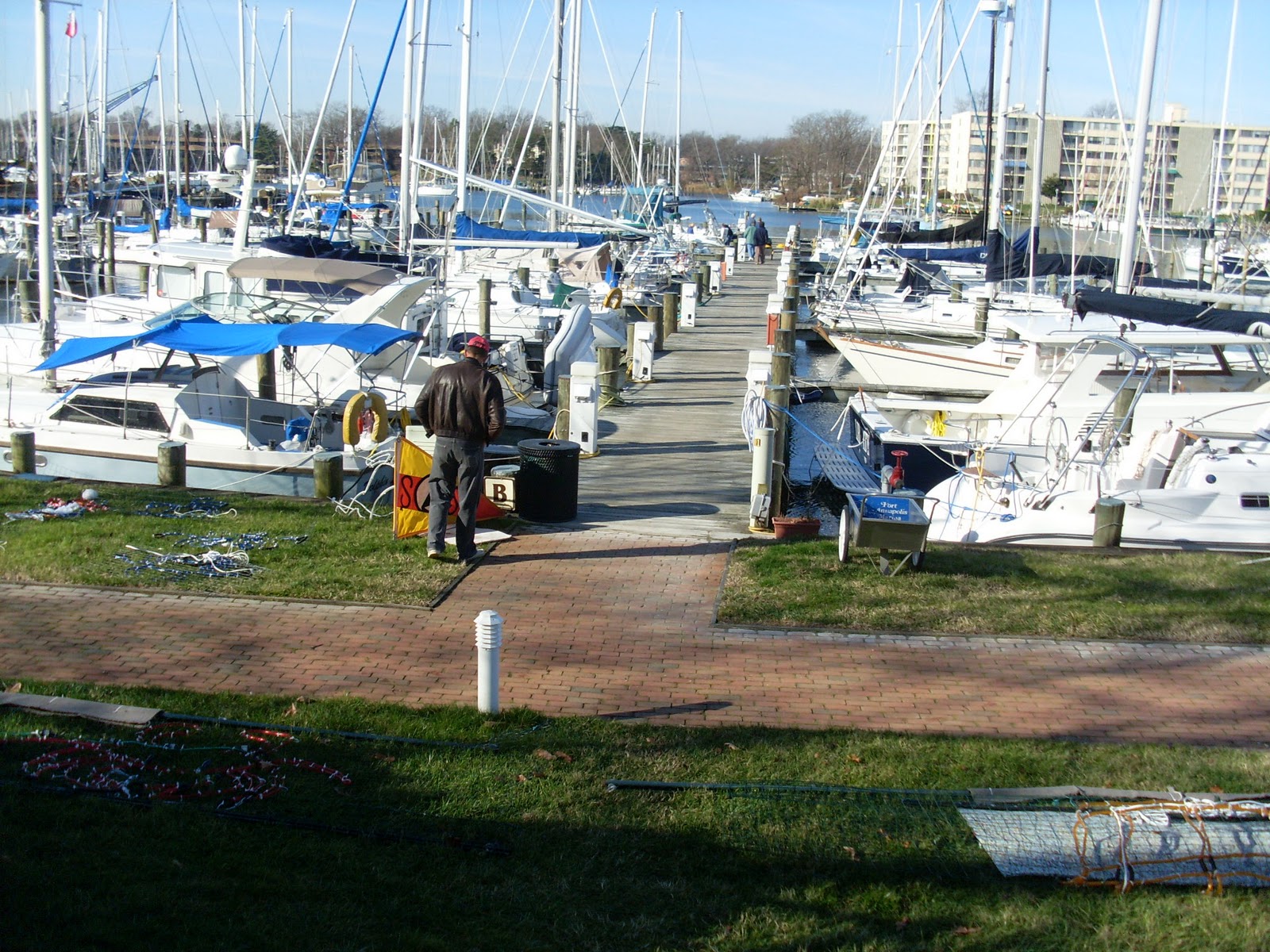
…..starting with hauling it all from the truck out the length of the dock to ‘Carolina Girl’, Christi Tinnes’ 31ft Beneteau that she volunteers for this event each year…
It’s a neattrick to get it all up a 50ft mast in the right orientation and secured forwhen the boat is in motion!
Then all the wiring connections must be made and labled so the various sections of the display find the right settings on the control panel ………
We even hauled a news photographer up the mast in the bosun’s chair to help him get some good pictures!
Here’s a short clip of some of the perparations ….
http://www.youtube.com/get_player
We think this year’s entry is boundto garner support of the judges!!